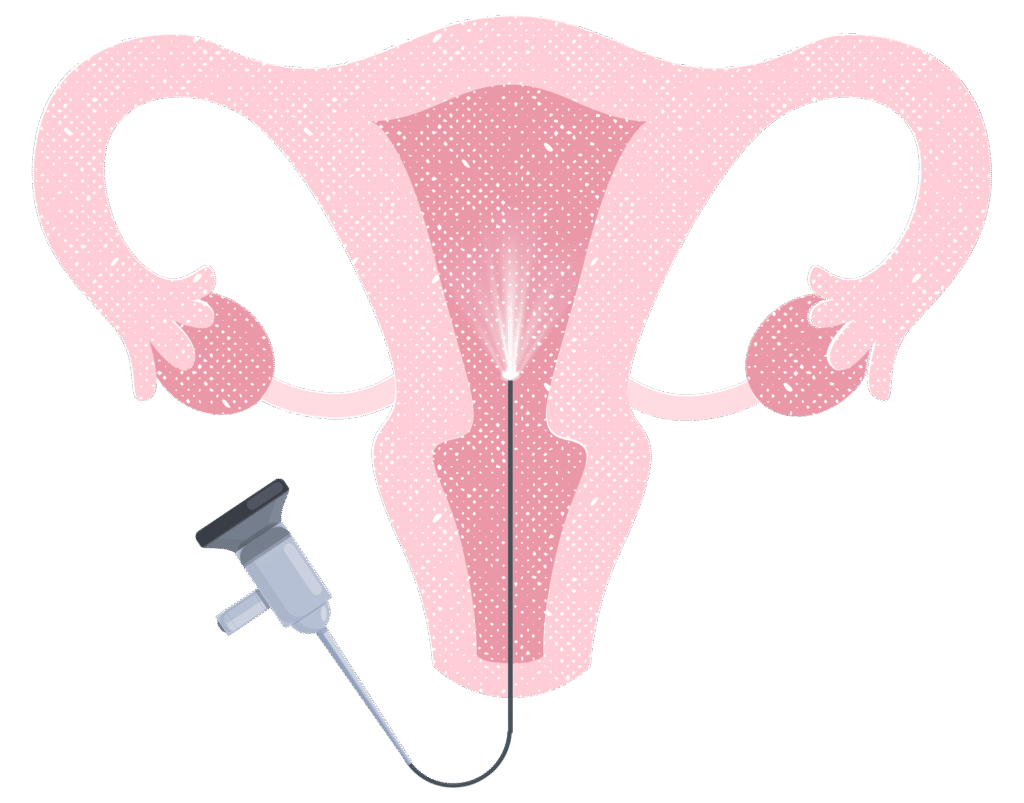
A hysteroscopy is a minimally invasive surgery where a thin camera is placed through the cervix to directly view the inside of the uterus: the site where the embryo implants.
Even if embryos are perfect, pregnancy can fail if the uterine cavity has issues like:
polyps
fibroids
septum
scar tissue
inflammation
Hysteroscopy allows a physician to view the inside of the uterus, diagnose the issue, and remove or correct the issue if present.
Diagnosing and treating these abnormalities can improve implantation and pregnancy outcomes.
Hysteroscopy allows a physician to view the inside of the uterus, diagnose the issue, and remove or correct the issue if present.
Diagnosing and treating these abnormalities can improve implantation and pregnancy outcomes.
Frequently Asked Questions
“When is a hysteroscopy performed?”
This procedure is performed between days 5–9 of a transfer cycle and is done under IV sedation. A hysteroscopy is performed in the clinic between 10:00am and 12:00pm.
“How should I prepare for a hysteroscopy?”
• Refrain from eating 6 hours prior to the procedure • Refrain from drinking fluids 3 hours prior to the procedure
“What should I expect after the procedure?”
• You will be monitored for an hour during IV sedation recovery. You may experience some nausea and drowsiness from the sedation.
• You will be prescribed a 7-day course of Doxycycline (antibiotic to help prevent infection).
• It is normal to experience spotting or bleeding for the next 7–10 days. Please do not use a tampon. Use a sanitary pad or panty liner to assess the bleeding.
• It is also normal to experience mild to moderate lower abdominal cramps (similar to menstrual cramps). It’s best to treat these cramps with Tylenol (Acetaminophen) or Motrin/Advil (ibuprofen). Your doctor will inform you of the dosage best for you.