
Embryo Testing
Embryo Testing
Inside each embryo are structures called chromosomes,
which carry all of the genetic material needed for development.

Inside each embryo are structures called chromosomes, which carry all of the genetic material needed for development.
A typical embryo has 46 chromosomes, arranged in 23 pairs (one from each parent). This is called being “euploid”, or chromosomally balanced.
Some embryos, however, have too many or too few chromosomes, which is known as “aneuploidy.”
These imbalances can prevent implantation or lead to miscarriage or genetic conditions.
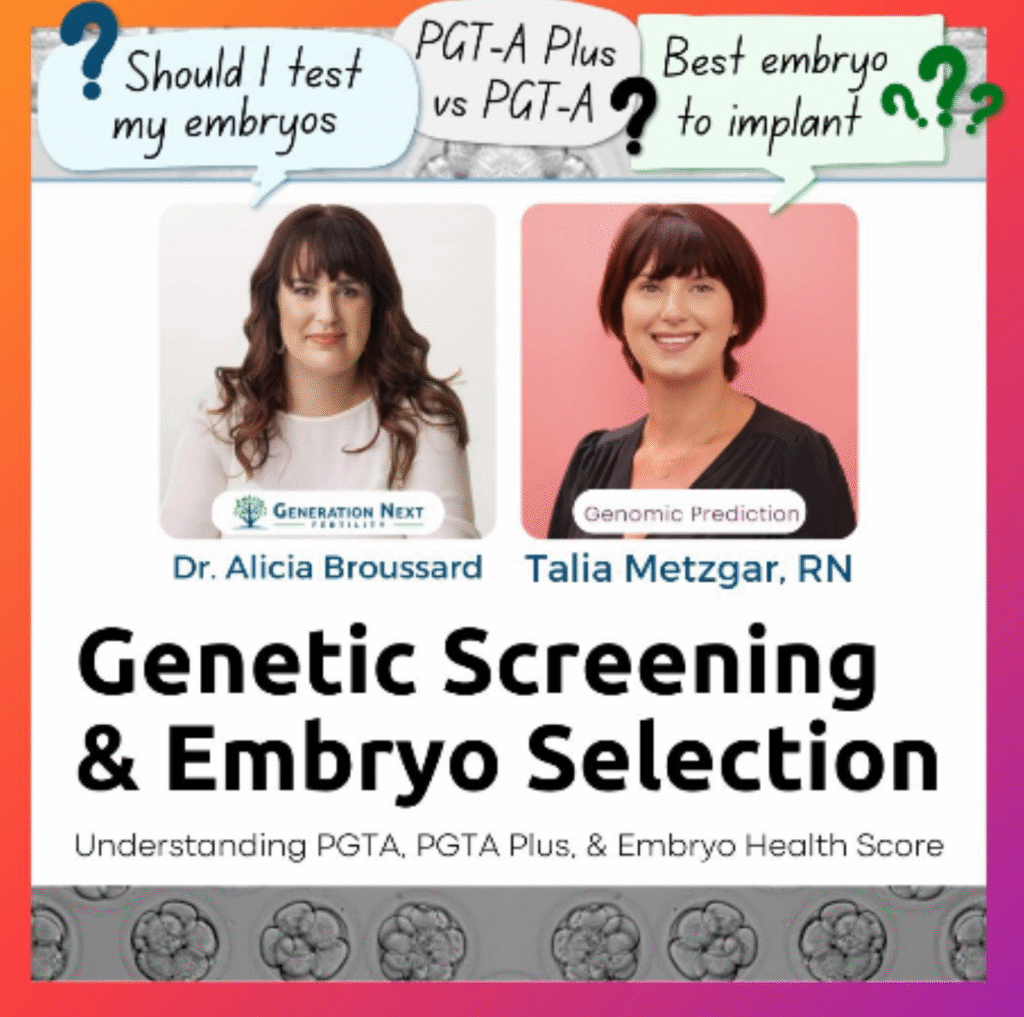
Not all embryos are genetically balanced. Some have too many or too few chromosomes, which can prevent them from implanting or lead to miscarriage. Others may carry inherited conditions or have a higher likelihood of developing certain diseases later in life. Embryo testing is a way to look at the genetic makeup of each embryo before a transfer and give you & your care team more information about which embryos are most likely to grow into a healthy pregnancy.
Benefits of Genetic Testing
Lower miscarriage risk
Avoiding inherited conditions and diseases
Improved success rates per transfer
The Process
1. Fertilization
After eggs are retrieved, they’re combined with sperm to create embryos. This can be done through ICSI, PICSI, or conventional insemination.
2. Embryo Biopsy
Once the embryo develops into a blastocyst, a few cells are gently removed from the outer layer (the part that will form the placenta). This process, called a biopsy, does not harm the embryo. The embryo is then safely frozen while we send the biopsy sample to the lab. If you’re doing PGT-M, PGT-SR, or the Embryo Health Score, in addition to PGT-A, those tests are run from the same biopsy, no extra procedure is needed!
3. Testing & Results
Our trusted partners at Genomic Prediction analyzes the samples to assess each embryo. Results are typically available within 9 to 10 business days. Once complete, your care team will walk you through the findings and help you decide which embryo to transfer or whether additional steps are needed.
4. Embryo Transfer
Your care team at Generation Next will walk you through the findings, taking as much time as you need to ensure that you understand what your results mean. You’ll also have the option to speak with a genetic counselor from Genomic Prediction if you’d like to understand the results in more detail. Once you and your care team are ready, the embryo with the best chance of success can be thawed and transferred in a future cycle, or preserved for later use.



Frequently Asked Questions
Data from Igenomix
"How accurate is PGT-A?"
Results of PGT-A testing are 98% accurate. There remains a 2% chance of a misdiagnosis, either by a false negative or false positive result.
A misdiagnosis can occur when the cells biopsied and tested do not represent the embryo as a whole (mosaicism). Because of this possibility, prenatal diagnosis (CVS or amniocentesis) are always recommended to confirm the results of PGT-A.
"Can PGT-A detect single gene disorders?"
PGT-A cannot detect single gene disorders such as cystic fibrosis, sickle cell anemia, or Tay-Sachs disease. Carrier screening can help identify couples who are carriers of a single gene disorder, even when there is no family history of that condition.
"Will genetic testing hurt my embryos?"
Embryo testing is considered safe and has been used for many years. On day 6 or 7 after fertilization, a small number of cells are carefully removed from the portion of the embryo that becomes the placenta (not the portion that becomes the baby).
There has been no documented decrease in implantation rates with embryo biopsy.
The chance of hurting the embryo is about 1% during the biopsy stage due to the requirement of assisted hatching for PGT.
The majority of embryos survive the biopsy but studies investigating the long-term consequences of embryo biopsy are limited.
There is a general risk of birth defects of 4-6% for any baby born following IVF treatment. Birth defects may be caused by genetic or non-genetic etiologies.
"How long does embryo genetic testing take?"
Results typically come back within 9 to 10 days after the embryo biopsy, but timing can vary slightly. If you’re doing a fresh IVF cycle, you’ll likely freeze your embryos while you wait for results, then plan a frozen embryo transfer once you and your doctor have reviewed the findings.
"Can I know the sex of my embryos?"
PGT-A testing includes information about sex chromosomes, so it can reveal the sex of each embryo. If the patient does not want the sex of the embryos to be reported, they must notify the staff in advance.
"What do my results mean?"
Embryos will be identified as chromosomally normal (46 chromosomes) or abnormal. PGT-A also screens for aneuploidies involving the sex chromosomes.
Normal: Embryos diagnosed as normal are good candidates for transfer as they are most likely to result in a successful pregnancy.
Abnormal: Embryos diagnosed as aneuploid are not recommended for transfer. There is the possibility that all embryos analyzed will be chromosomally abnormal. This possibility is more likely when there are fewer embryos to analyze and with age-related infertility.
Inconclusive: There is a possibility of inconclusive results for an individual embryo due to lack of DNA or poor DNA quality. Re-biopsy and re-testing of embryos with inconclusive results may be discussed with the physician.
"Do I need embryo testing if I’m under 35?"
While age is a factor in embryo health, younger patients can still produce embryos with chromosome issues. Embryo testing (like PGT-A) can be helpful if you’ve had past miscarriages, failed IVF cycles, a family history of genetic conditions, or are using donor eggs or sperm.
"Does age affect chances of having an aneuploid embryo?"
Yes, the chances of having an abnormal embryo increases with maternal age. The chance of aneuploidy for each blastocyst embryo based on maternal age is as follows:
- 43% for women between the ages of 25-30
- 45% for women between the ages of 31-34
- 54% for women between the ages of 35-37
- 65% for women between the ages of 38-40
- 71% for women between the ages of 41-42
- 80-90% for women between the ages of 43-46
"Are there alternatives to PGT?"
Non-invasive prenatal testing is an alternative prenatal option, but may also have false negatives and false positives. Prenatal testing options can be discussed with the obstetrician. PGT-A cannot detect birth defects directly.

