As we age, both the number of eggs in the ovaries and the quality of those eggs naturally decrease.
Egg freezing is a process where eggs are retrieved, frozen at ultra-low temperatures, and stored until you’re ready to use them. Egg freezing gives you the chance to use your younger, healthier eggs later in life.
Think of it like hitting the “pause button” on your eggs so they stay the same age that they are today.
Think of it like hitting the “pause button” on your eggs so they stay the same age that they are today.
May have genetic or medical factors that affect fertility
Education is Empowerment
Egg freezing gives you the opportunity to understand your fertility, explore your options, and take an active role in planning your future. Our role is to give you clear, honest information about what egg freezing can and cannot do. With personalized guidance and evidence-based care, you gain the clarity to decide whether egg freezing supports the future you’re building.
Meet the Minds Shaping the Future of Fertility Care
At Generation Next Fertility, our physicians bring together decades of experience in reproductive medicine with a shared belief that care should feel as precise as it is personal. Our providers approach each patient as an individual: integrating science, intuition, and communication to build trust through understanding. Their expertise spans every stage of fertility care to meet you where you are and guide you forward with clarity and confidence.
“We’re a very different kind of fertility center offering a next-generation level of care blended with world-class science. That attentiveness is what makes our patients feel truly seen.”
“Ever since I was a little girl, I have wanted to empower and educate women so that they can have full control of their journey to parenthood. It’s the most fulfilling aspect of my career.”
“Every day I see hopeful parents who have been turned away from clinics that fall outside their standard protocols. Great treatment does not have to come at the cost of being treated like a number.”
“From a young age, I knew that my purpose was to make a difference in women’s health, rooted in my upbringing within the medical industry and my personal connection to endometriosis.”
The Egg Freezing Process
Step One: Understanding Your Egg Count
Your egg freezing journey begins with an initial visit with our Generation Next Fertility team at our Midtown Manhattan, Westchester, or Long Island location.
During a consultation, your doctor gets to know your medical history, discusses your goals with you, and performs a fertility evaluation to understand your ovarian reserve. This includes a blood test for AMH and Day 3 FSH, as well as a transvaginal ultrasound to measure your antral follicle count.
Together, these tests give us a clearer picture of how your ovaries are functioning and help us estimate how many eggs we may be able to retrieve in a cycle. This information guides us in creating a personalized stimulation plan tailored to your body and your reproductive goals.
"What if I have a low ovarian reserve?"
Ovarian reserve helps us understand how many eggs you may be able to retrieve with stimulation. It does not predict your ability to conceive naturally, the quality of your eggs, or the timing of when menopause begins. Having a lower reserve means we may need to tailor the plan to maximize egg quality or perhaps consider doing more than one cycle. Ultimately, it depends on the individual and our providers will help you understand what to expect for your case in particular during a consultation.
Step Two: Preparing for Your Egg Freezing Cycle
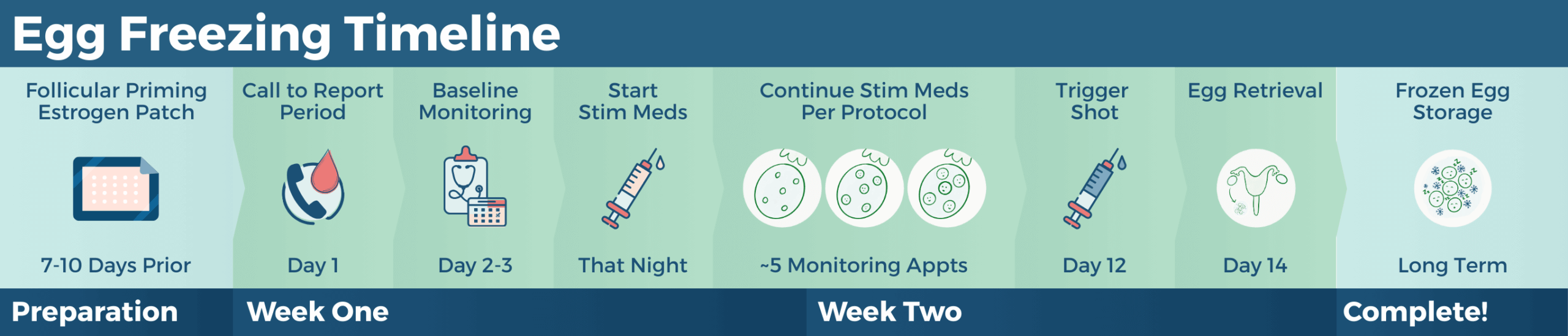
After your consultation, some patients choose to begin their cycle right away, while others prefer to wait. The active part of egg freezing, from baseline to retrieval, takes about two weeks. During your visit, your doctor will review your results, answer your questions, and help you plan for the timing that feels right for your body and your schedule.
The cycle officially begins on “Day 1,” which is the first day of your period. When you’re ready to begin, you’ll be prescribed a priming protocol, usually an estrogen patch or pill, 7–10 days leading up to Day 1. On the day your period begins, call our office to schedule a baseline appointment. This visit includes a quick ultrasound and bloodwork to confirm that your ovaries and hormone levels are in the right place to begin stimulation.
Step Three: Stimulation & Monitoring
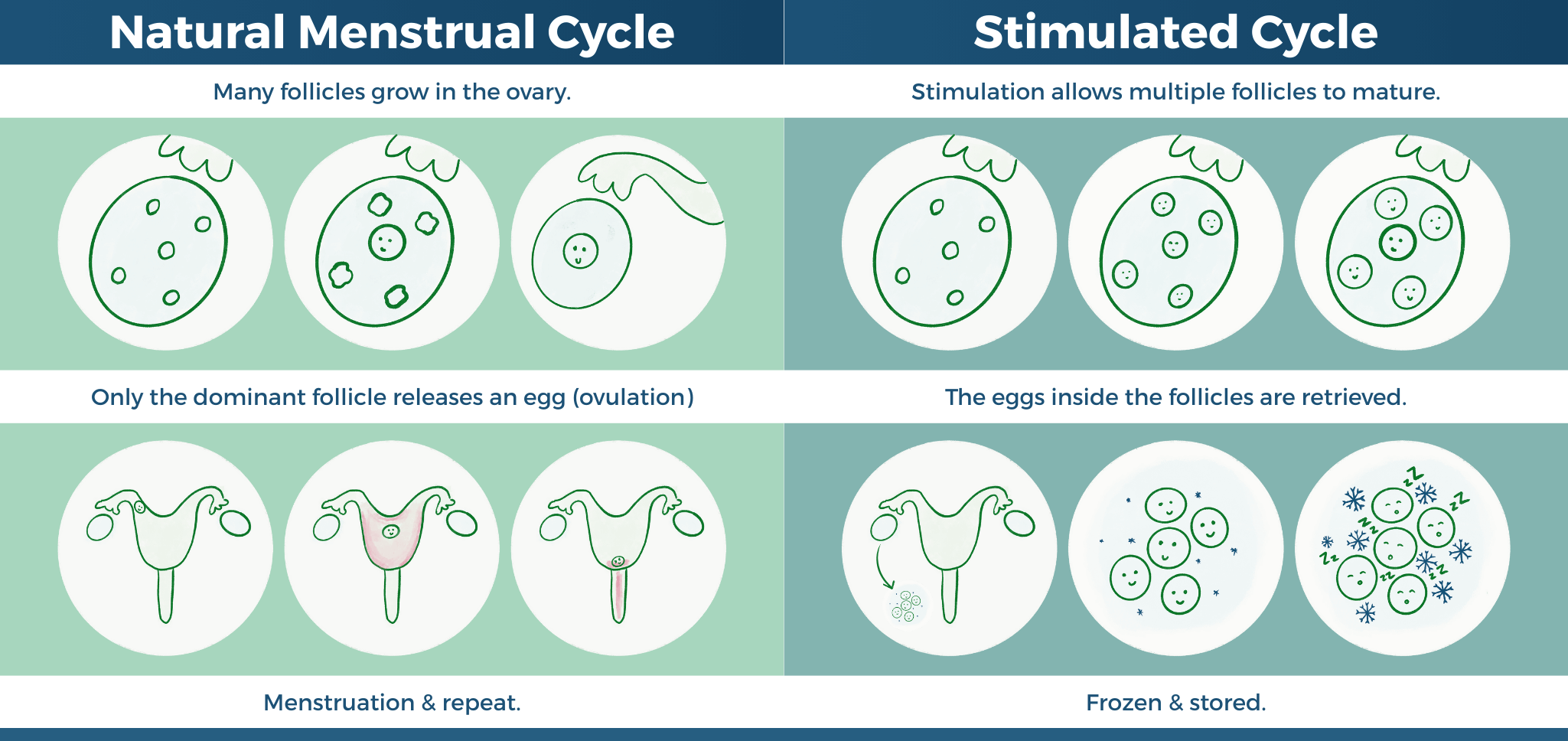
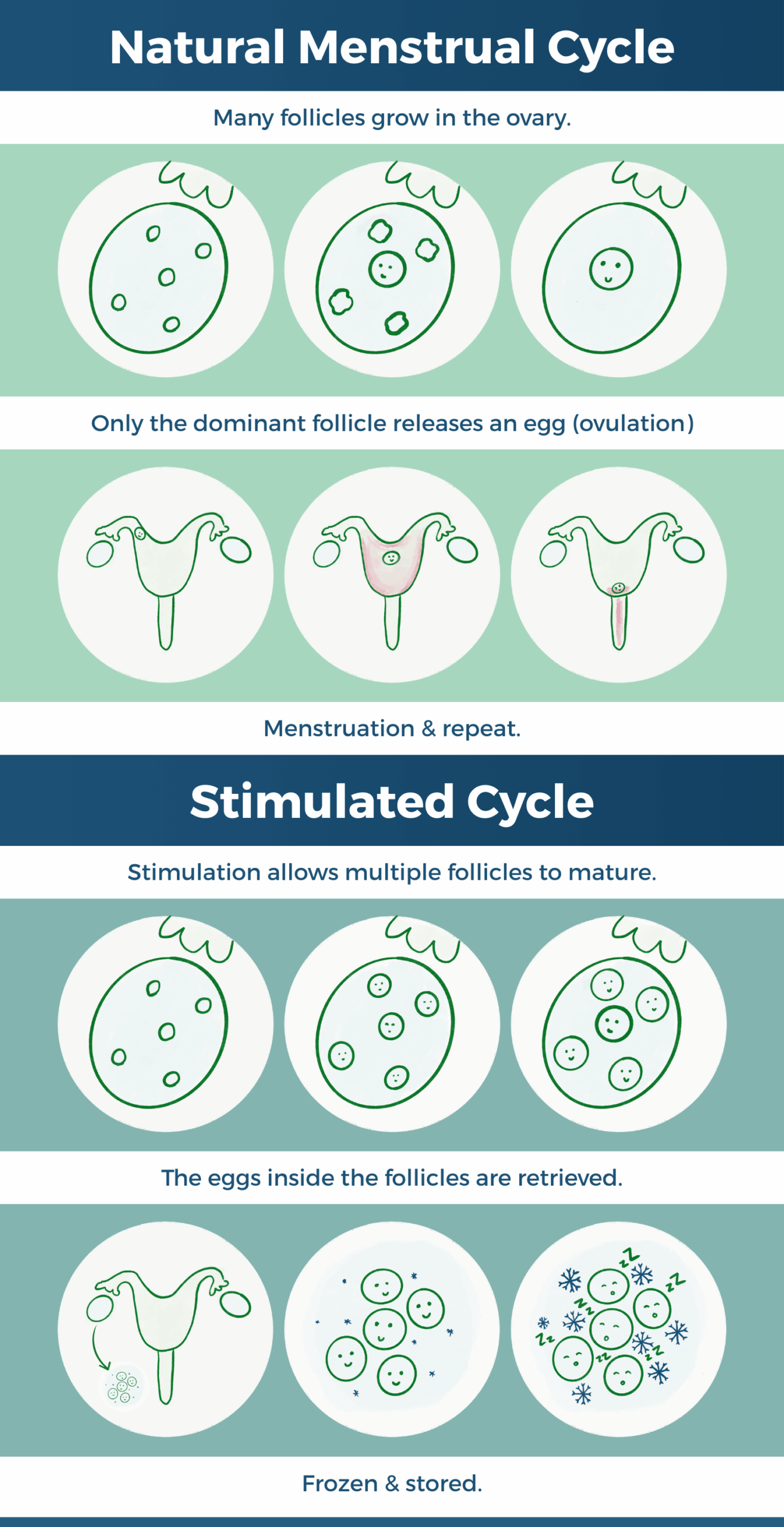
In a natural menstrual cycle, many follicles begin growing in the ovaries at once, but only one fully matures and releases its egg during ovulation.
During an egg freezing cycle, the goal is different: instead of maturing just one egg, we aim to safely grow as many eggs as your body can produce in that month. To do this, stimulation medications containing fertility hormones encourage multiple follicles to grow at the same time. Because each follicle has the potential to develop an egg, supporting more follicles increases the number of eggs we can retrieve in a single cycle.
Monitoring appointments allow your care team to track follicle growth, check hormone levels, and adjust your medications to keep your cycle progressing safely and effectively.
When your follicles reach the right stage of development, you’ll take a final medication called the trigger shot. This medication helps the eggs complete their last step of maturation so they’re ready for retrieval approximately 35–36 hours later.
Your exact protocol is personalized to your ovarian reserve, medical history, and how your body responds. Your doctor will design a plan that balances safety, comfort, and your reproductive goals.
"Is the process painful?"
People generally describe the egg freezing process as uncomfortable at times, but not typically painful. It’s common to feel bloating, fullness, or a sense of pelvic heaviness as the follicles grow. These sensations resolve after the egg retrieval, when the ovaries return to their normal size.
The medications typically used for stimulation are given as small injections just under the skin. The needles are very thin, and every patient receives a full medication teaching orientation along with step-by-step resources, so you know exactly what to do and what to expect.
Everyone’s body responds differently, but overall, the process is tolerable for most patients, and the discomfort is temporary.
"Do I need to take time off work/school?"
Most patients are able to continue working or attending classes throughout ovarian stimulation. Our monitoring appointments start as early as 7:00 AM, which allows for quick visits before the day begins. These morning appointments are quick and easy to fit into most routines, but if scheduling becomes difficult at any point, our team is happy to work with you to find accommodations or coordinate outside monitoring with the clinics in your area.
Egg retrieval, which typically happens around Day 14 of the cycle, is a different type of appointment. Most patients choose light sedation for comfort, which means you cannot return to work, attend school, or drive yourself home afterward. Plan to take the rest of the day off to rest; you should feel back to normal by the next day.
Step Four: Egg Retrieval
Egg retrieval is a short outpatient procedure, usually lasting about 15 to 20 minutes. You’ll be under light sedation the entire time so that you’re comfortable and relaxed. Using a gentle ultrasound-guided technique, your doctor collects the fluid from each mature follicle in the ovaries. The number of eggs retrieved varies from person to person and depends on factors such as age, ovarian reserve, medication response, and overall reproductive health.
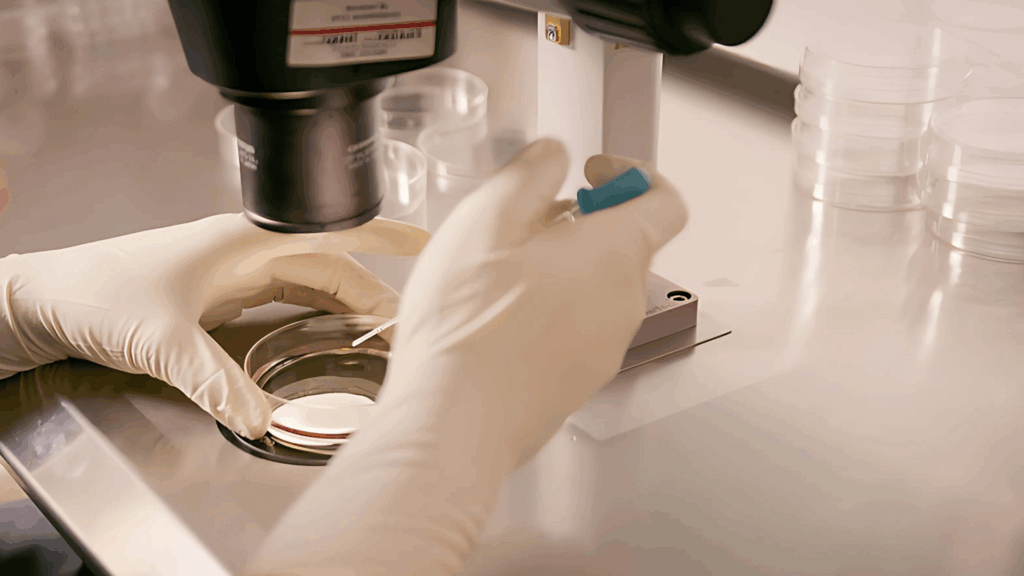
After the procedure, you’ll rest briefly in our recovery area before heading home. Most patients resume normal activities the next day, though it’s common to feel mild cramping or pressure for a short period afterward. Immediately following your retrieval, your follicular fluid is brought directly to our on-site embryology lab, where our specialists identify and prepare your eggs for freezing.
Step Five: Freezing & Storing Your Eggs
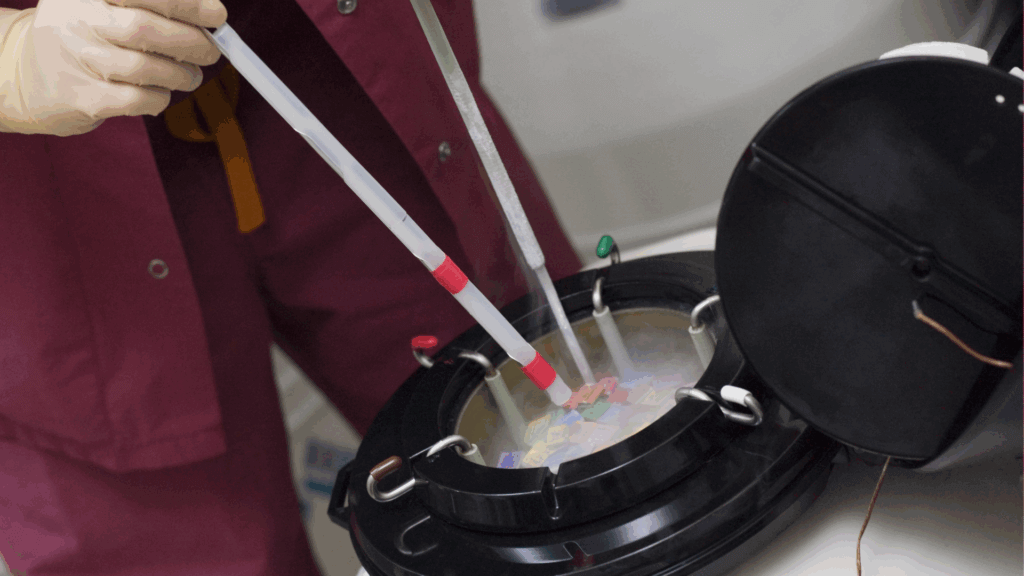
Once your eggs have been collected, they are frozen using a process called vitrification: a rapid flash-freezing technique that protects the eggs from ice crystal formation and helps maintain their integrity over time.
After freezing, your eggs are placed into secure liquid nitrogen storage tanks within our facility. They remain safely stored at stable, ultra-low temperatures until you decide you’re ready to use them. There is no known time limit on how long eggs can remain frozen while still maintaining their potential; eggs stored for many years can still lead to healthy pregnancies.
Fun Fact:
The longest time a frozen egg was reported to have been stored before becoming a healthy baby is over 10 years!
Fun Fact:
The longest time a frozen egg was reported to have been stored before becoming a healthy baby is over 10 years!
Free Egg Freezing with the 50/50 Program
Half for you, Half for a family in need
Our 50/50 Egg Freezing Program gives eligible participants the opportunity to freeze their eggs while also helping another family seeking an egg donor. 50/50 participants receive egg freezing at no cost, plus one year of complimentary storage.
Your generosity can change lives in the most profound way. If you’re ready to make a real impact while also pursuing your own goals, see if you qualify:
Our 50/50 Egg Freezing Program gives eligible participants the opportunity to freeze their eggs while also helping another family seeking an egg donor. 50/50 participants receive egg freezing at no cost, plus one year of complimentary storage.
Your generosity can change lives in the most profound way. If you’re ready to make a real impact while also pursuing your own goals, see if you qualify: